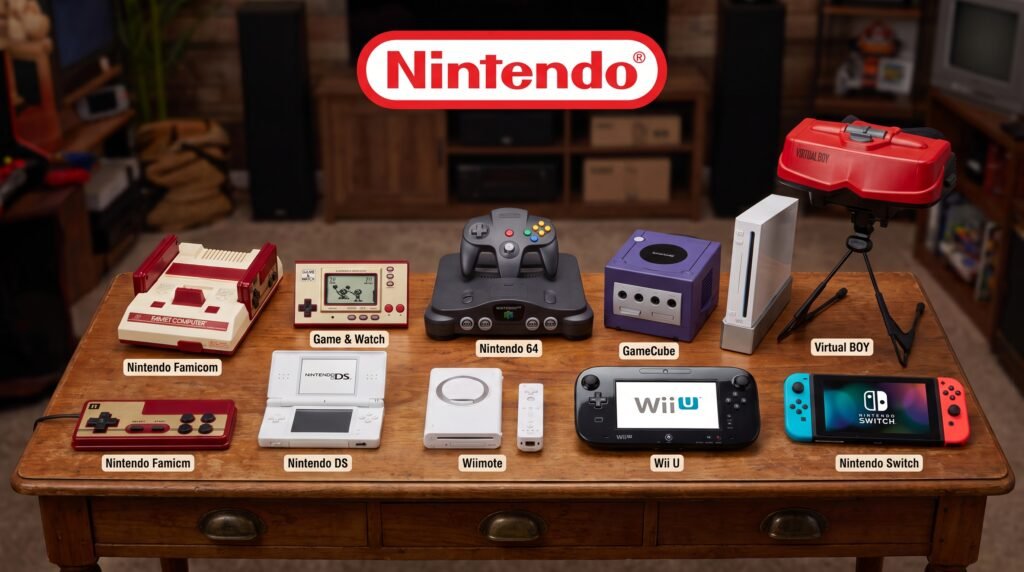
Nintendo has spent more than forty years losing the specs war on purpose.
Every generation, some other company shows up with more processing power, sharper graphics, or a bigger number on the box. And every generation, Nintendo builds something cheaper, weirder, and usually more profitable. This isn't an accident or a lack of ambition. It's a design philosophy that traces back to one engineer's stubborn idea about what "old" technology is actually good for, and it still shapes the hardware coming out of Kyoto today.
An Engineer's Doctrine, Not a Slogan
The phrase is kareta gijutsu no suihei shikou is usually translated as "lateral thinking with withered technology." It came from Gunpei Yokoi, the Nintendo engineer better known for inventing the Game Boy and the D-pad, and it's less a marketing line than a genuine engineering doctrine. Yokoi's argument was that mature, cheap, thoroughly understood components could be pushed sideways into uses nobody had tried before, and that this was a smarter bet than chasing whatever chip was newest and most expensive.
The logic held up because it sidestepped almost every risk that sinks hardware projects. Mature components come with mature manufacturing, so yields are high and unit costs are predictable. There's no bleeding-edge fabrication process to gamble on, no exotic component that might not scale to mass production. Nintendo could hit a price point and defend a profit margin on hardware while everyone else was racing each other into the red.
It also meant that when something failed, it didn't take the company down with it. The Virtual Boy, Nintendo's ill-fated 1995 headset, is the standard example: it flopped commercially, but because it was built from inexpensive, already-proven parts, the failure was a bruise rather than a wound. Former president Satoru Iwata later pointed to the Nintendo DS's dual screens and the Wii's small, power-sipping frame as direct descendants of the same thinking. Different decades, different products, same instinct: work within cheap, dependable limits rather than against expensive, cutting-edge ones.

Building a Console for Under Ten Thousand Yen
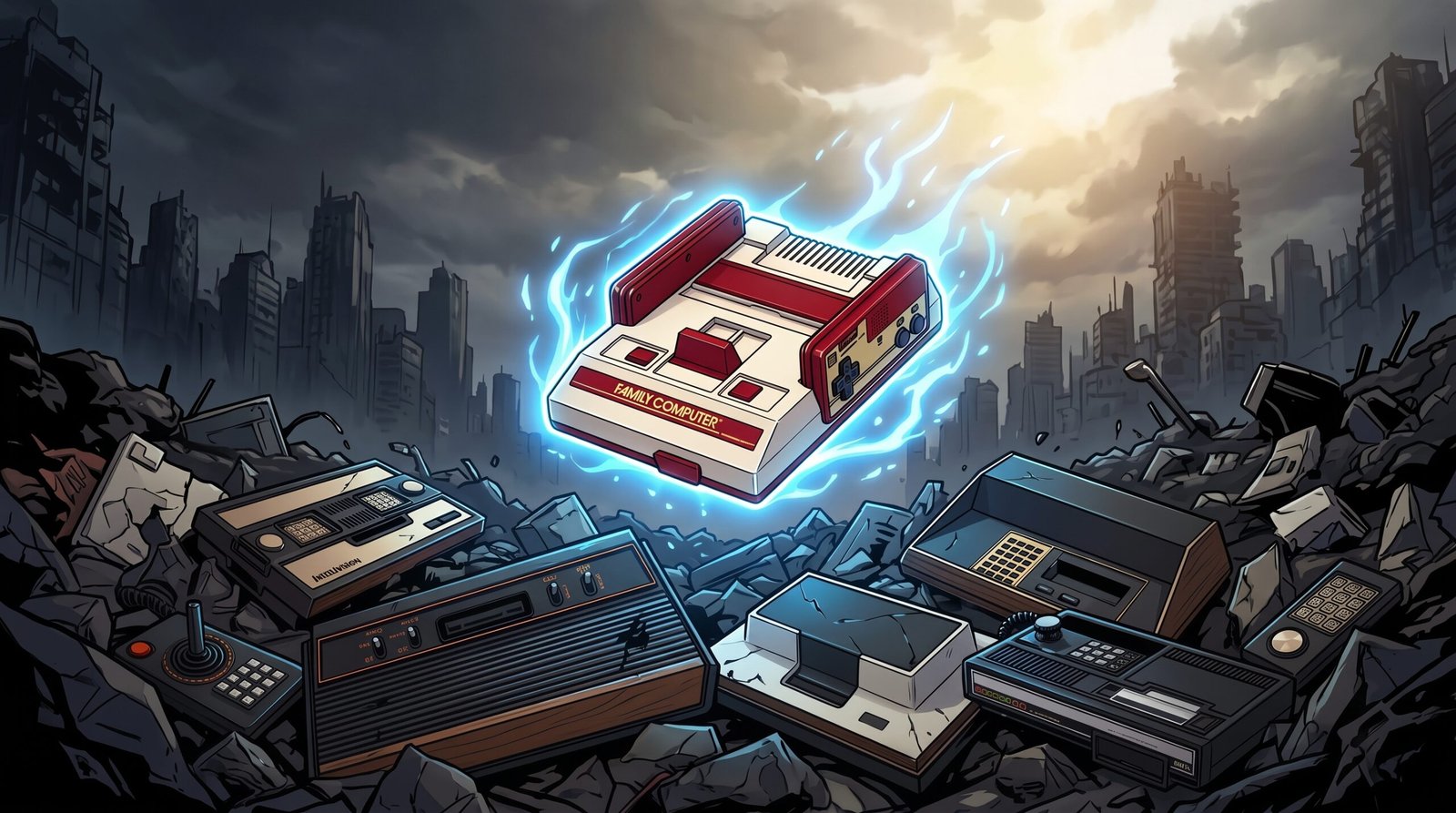
The doctrine's clearest test case is the machine that made Nintendo a video game company in the first place.In November 1981, company president Hiroshi Yamauchi handed the job to Masayuki Uemura, a former Sharp engineer who'd already cut his teeth on Nintendo's arcade hardware for Radar Scope and Donkey Kong. Yamauchi's brief was blunt: the thing had to stay commercially viable for at least three years, and it had to retail for under 10,000 yen, with an internal target closer to 9,800. It's a nice illustration of how ambitious that target actually was that Nintendo didn't hit it. The Famicom launched in 1983 at 14,800 yen, once the cost of the custom silicon inside it was accounted for. Even the miss tells you something about the priorities in the room.
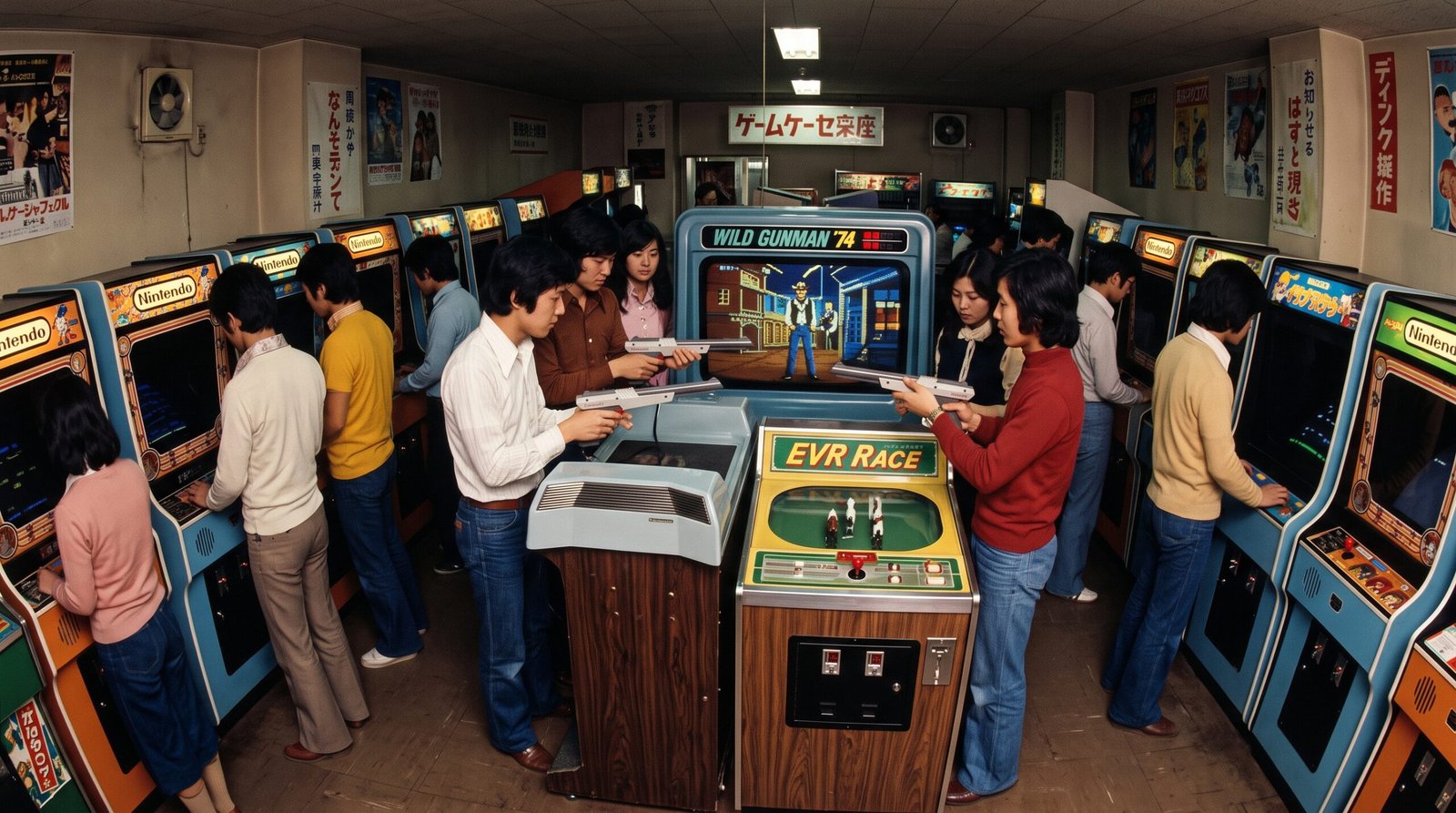
Uemura's team was part of the R&D2 division, and was small by design consisting of only around five engineers as most of Nintendo's hardware staff were tied up producing Game & Watch units elsewhere in the company. They didn't even have proper tools for the target processor architecture at first. The team ended up putting up recruitment fliers at a local university to hire a student who could help build a basic toolchain. Getting existing arcade games to run on the new hardware meant literally timing them with stopwatches, frame by frame, to reverse-engineer how Donkey Kong actually behaved before they could rebuild it for the living room.
To get the silicon made, Nintendo partnered with Ricoh. The commercial negotiation is a small story in itself: Ricoh's Toshifumi Asakawa initially expected orders around a million units based on the prototype, and early drafts of the deal had Nintendo guaranteeing purchases of three million units over two years. Nintendo's Katsunori Tanimoto pushed to have that binding commitment removed as sales were too uncertain to promise at that scale, and Ricoh agreed on the condition that it got an exclusive contract barring it from selling the custom chips to anyone else without Nintendo's sign-off. Both sides were hedging against a market that, nobody could see clearly.
What came out of that partnership was the Ricoh 2A03, an ASIC built around a MOS Technology 6502 core with its decimal math mode switched off (a licensing workaround, not a technical necessity) and the audio processing unit folded directly onto the same die to save board space and cost. Graphics were handed off entirely to a companion chip, the Ricoh Picture Processing Unit, which handled tile backgrounds and sprites in dedicated hardware rather than making the CPU do that work in software.
Component
Role
CPU Core
APU (on the 2A03 die)
S
PPU (separate chip)
Modified 6502, handles game logic and system control
Five audio channels — two pulse wave, one triangle wave, one noise, one sample playback
Dedicated tile and sprite rendering, its own memory space
Splitting the memory addressing between the CPU and the PPU let the Famicom do smooth scrolling and sprite animation that outclassed general-purpose home computers selling at a similar price. It also meant developers spent the next several years figuring out clever tricks — swapping data in and out of tiny RAM budgets, compressing audio samples — just to work within what the hardware would allow. Constraint, not raw capability, became the design brief for an entire generation of games.
Stepping Off the Treadmill
By the time Nintendo reached the mid-2000s, the doctrine had a new problem to solve. Home consoles were locked in an arms race over clock speed and floating-point performance, and that race came with a cost nobody particularly wanted to advertise: heat. More power meant bigger fans, bigger enclosures, and consoles that sounded like small aircraft under a television stand.
Genyo Takeda, who'd joined Nintendo in 1972 and eventually ran the company's Integrated Research & Development division, steered hardware through the Nintendo 64, GameCube, Wii, and Wii U years with a different question in mind. Rather than "how much power can we fit in this box," it became "how little power can we get away with while still making something people want to play." Takeda and hardware architect Ko Shiota, who would go on to become a central figure in the Wii and Wii U's engineering, focused on the three variables that actually determined how a console felt to own: processing efficiency, power draw, and physical die size. Multi-core layouts were tuned to stay cool and quiet without needing the aggressive cooling hardware that a horsepower-first approach would have demanded.
It's worth pointing out this wasn't Nintendo abandoning performance so much as redefining what performance meant. A console that runs silent, fits in a small living room cabinet, and doesn't need a jet-engine fan is solving a different problem than one chasing benchmark scores. For a company selling into family living rooms rather than enthusiast PC builds, that was arguably the more relevant problem to solve.

One Division, One Chip, One API
In September 2015, Nintendo folded its hardware and software-platform teams together. The Integrated Research & Development division and the System Development division merged into a single Platform Technology Development Division (now known as the Technology Development Division), with Ko Shiota installed as its senior general manager. It wasn't just an organisational chart reshuffle. It put the people building the hardware and the people building the software stack that ran on it in the same room, reporting to the same person. This was a structural bet that the next console would need hardware and software designed together from day one rather than handed off in sequence.
That console was the Switch, and it took the "withered technology" idea somewhere Yokoi probably never pictured: mobile phone silicon. Rather than commissioning another round of expensive, purpose-built desktop-class chips, Nintendo partnered with Nvidia and built the Switch around a customized Tegra X1 system-on-chip. This system had four ARM Cortex-A57 CPU cores paired with a Maxwell-generation GPU offering 256 CUDA cores, all fed by an LPDDR4 memory interface. It's a chip that was designed for tablets and set-top boxes, not gaming consoles, repurposed and tuned to hit a specific thermal and battery budget for a machine that had to work equally well docked to a TV and held in two hands on a train.
Getting real performance out of mobile-class silicon meant going around the usual software layers. Nintendo and Nvidia co-developed NVN, a low-level graphics API built specifically for the Switch rather than adapted from an existing desktop standard. Skipping the abstraction and driver overhead that a general-purpose API carries gave developers closer to direct control over the GPU, which mattered enormously for a machine trying to squeeze console-level visuals out of a battery. Leaked documentation on later API revisions suggests Nintendo has kept iterating on it since, including groundwork for image-upscaling techniques that let a small chip punch above its weight on a television screen.
The Same Bet, Six Different Times
Line the eras up and the pattern is hard to miss. The Famicom used a repurposed, licensing-hobbled CPU because a purpose-built one would have blown the budget. The Wii and Wii U turned down the clock-speed race because the payoff wasn't worth the heat and the noise. The Switch borrowed a chip built for tablets because it was mature, cheap, and good enough with the right software wrapped around it. Different decades, different components, same underlying question: what can we do with parts that are already reliable, already cheap, and already understood, if we're willing to be a little more inventive with the software?
It's not a glamorous story, and Nintendo has never really tried to sell it as one. But it's arguably the reason the company has stayed a hardware maker at all, while plenty of rivals with far bigger specs have come and gone. Chasing the biggest number on the spec sheet is expensive and unforgiving. Getting clever with the technology everyone else considers already withered has, for Nintendo, been the safer bet and, more often than not, the more interesting one.
Sources
Primary Sources & Historical Interviews
Iwata Asks: Super Mario Bros. 25th Anniversary – Vol. 2: NES & Mario History — Former R&D2 head Masayuki Uemura recounts Hiroshi Yamauchi’s sub-10,000 yen target, the Ricoh chip negotiations with Toshifumi Asakawa and Katsunori Tanimoto, and stopwatch-timing arcade boards.
Iwata Asks: Game & Watch — Discussion of Gunpei Yokoi’s foundational design ethos, repurposing cheap LCD calculator displays, and the origins of kareta gijutsu no suihei shikou.
Iwata Asks: Wii – Vol. 1: The Hardware — Genyo Takeda and Ko Shiota explain the decision to step away from raw megahertz and silicon arms races to prioritize whisper-quiet cooling, low power draw, and compact living-room footprints.
Iwata Asks: Wii U – The Console — Hardware architect Ko Shiota details multi-core integration, multi-chip module (MCM) thermal efficiency, and power budget management.
Silicon Architecture & Technical Analysis
Rodrigo Copetti: NES Architecture – A Practical Analysis — In-depth architectural teardown of the Ricoh 2A03, the disabled decimal (BCD) mode on the MOS 6502 core, integrated audio processing, and the dedicated Picture Processing Unit (PPU).
NESdev Wiki: Ricoh 2A03 Technical Reference — Comprehensive hardware documentation detailing the 2A03 core architecture, internal APU channel generation, memory mappings, and bus separation.
NVIDIA Official Blog: Nintendo Switch Powered by Custom NVIDIA Tegra Processor — Official release confirming the Switch's Maxwell-based Tegra architecture and the custom-built, low-overhead NVN graphics API.
Digital Foundry: Inside Nintendo Switch’s Tegra X1 Hardware — Technical analysis evaluating the repurposing of mobile-class silicon (ARM Cortex-A57 cores and Maxwell GPU) within strict portable thermal and battery budgets.
Corporate Restructuring & Strategy
Nintendo Co., Ltd.: Notice Regarding Personnel Changes and Reorganization (September 14, 2015) — Official corporate document detailing the consolidation of Integrated Research & Development and System Development into the Platform Technology Development Division under Ko Shiota.
Gamasutra / Game Developer: The Legacy of Gunpei Yokoi — Retrospective on Yokoi’s engineering doctrine, examining the trade-offs of the Game Boy, the commercial failure of the Virtual Boy, and its legacy across modern consumer hardware.