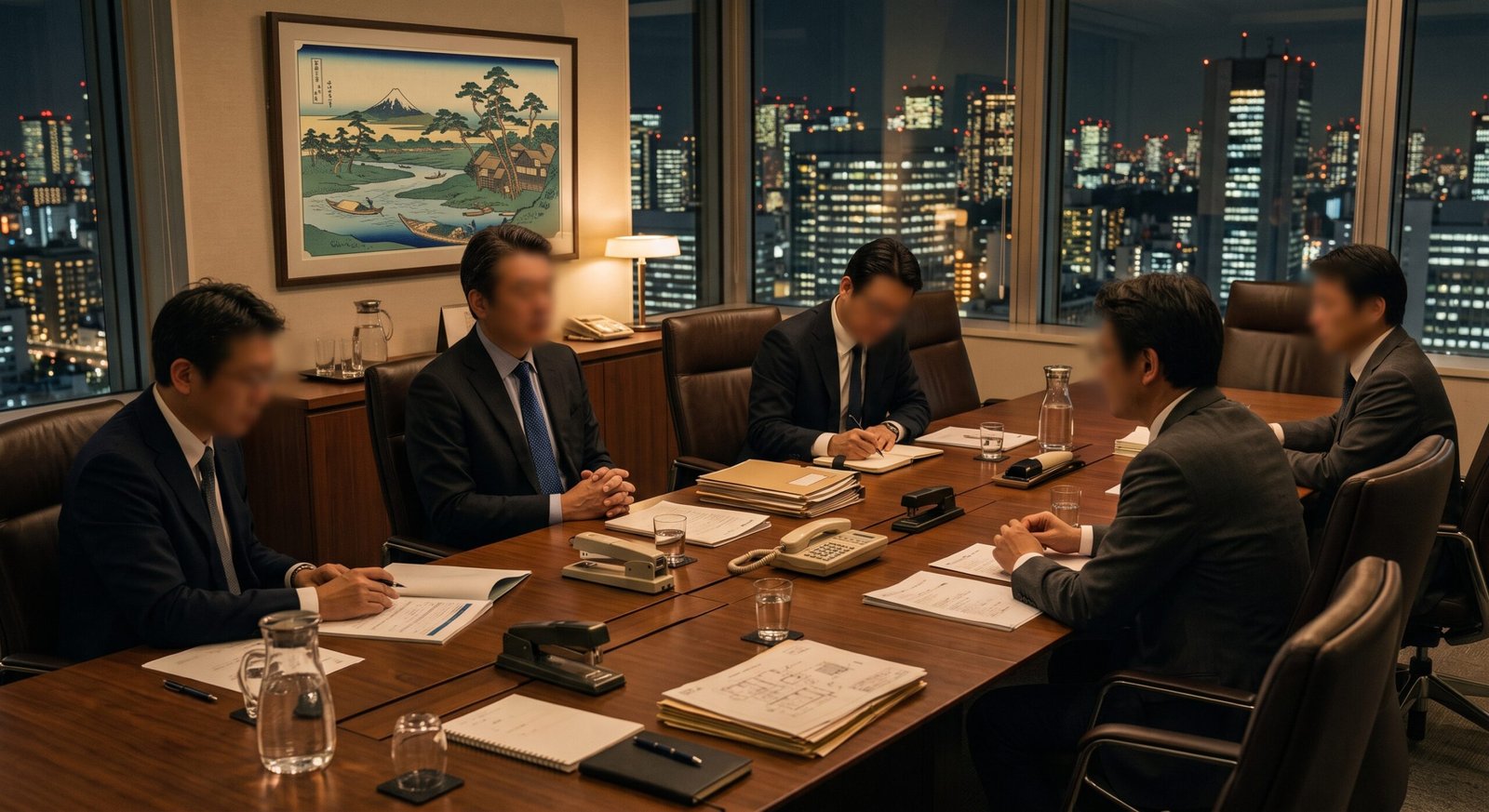
The person who eventually made it give was an unlikely revolutionary: a JSL administrator named Kenji Mori, who held the fairly dry title of General Secretary (総務主事). In March 1988, working alongside JSL Executive Secretary Kōzō Kinomoto, Mori set out to build the case for professionalisation from the inside. He understood something that a more direct reformer might have missed: the corporate boards bankrolling JSL clubs would reject anything that looked like it might raise their costs or hand more leverage to their employee-players, and they'd reject it on sight.
So Mori didn't ask them to consider professionalisation. He never used the word at all. The reform body he set up was named, blandly and deliberately, the JSL Activation Committee, a title vague enough to sail past conservative club sponsors while its members quietly built the blueprint for a professional league underneath it. To chair the committee, Mori picked Junji Ogura, a JFA administrator with a reputation for even-handedness, and filled out the remaining seats with nine figures pulled from across the sport, including 1968 Olympic bronze medallist Ryūichi Sugiyama.
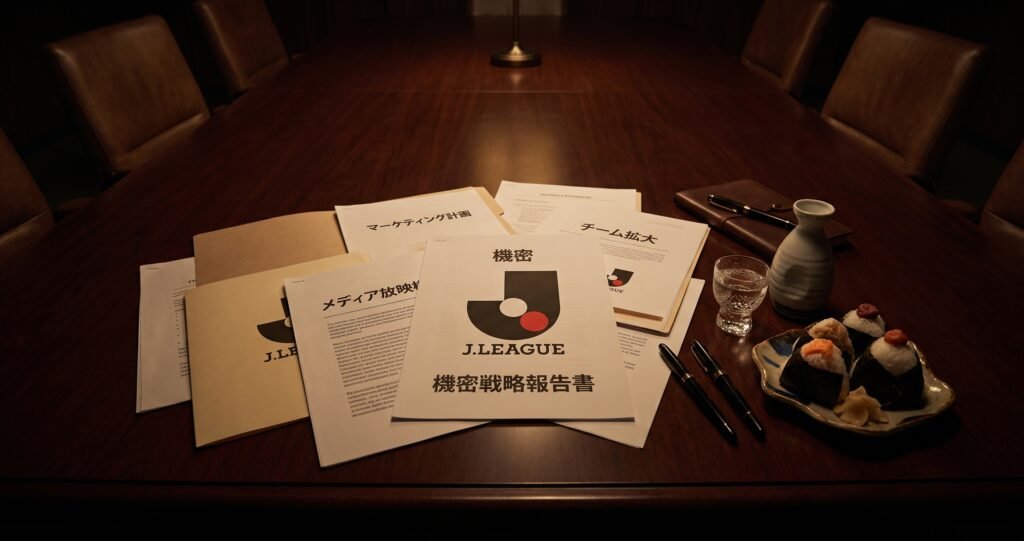
The committee itself moved with the kind of pace that only a group worried about being shut down can manage. It held its first meeting on 17th March 1988 and reconvened roughly every fortnight after that, six sessions in total, working through what other countries' professional leagues actually looked like, what Japan's own league was getting wrong, and whether a professional structure could realistically survive here at all. By July 1988, it had turned that into a formal report, submitted to the JFA's board. It ran to a little over twenty pages, a modest document for the amount of change it was proposing, and it argued plainly that domestic revitalisation and national team competitiveness both required a complete break from corporate amateurism. Nearly every principle that would define the J.League five years later, the hometown clubs, the youth academies, the break from company ownership, was already in it.
Mori himself wouldn't be the one to carry it forward. In April 1988 he was promoted to department manager at Furukawa Electric's Nagoya office, taking charge of more than three hundred staff, and found he couldn't run a corporate department in Nagoya and a football reform movement in Tokyo at the same time. Something had to give there too, and in August 1988 he stepped down from his JSL post. His successor was Saburō Kawabuchi (川淵三郎), a former national team forward and 1964 Olympian who had gone on to manage the national side and had spent his corporate career, like Mori, at Furukawa. It would turn out to be the right handover at exactly the right moment.
Kawabuchi Takes the Wheel
Where Mori had worked carefully and by stealth, Kawabuchi moved fast. Within two months of taking over, he was appointed to the JFA board, and he used the position to do something Mori never had: shift the whole argument out of the JSL's hands. The JSL Council, made up largely of the same corporate representatives who'd have to pay for any of this, was never going to approve a plan that threatened their comfortable arrangement. Kawabuchi didn't bother trying to convince them. Instead, he set up a Second Activation Committee, and when the JSL Council received its recommendations in March 1989 and pushed back exactly as expected, he went over their heads to Shizuo Fujita, the JFA's president, and made the case directly.
It worked. On 2nd June 1989, the JFA formally established the Pro League Study Committee, with Kawabuchi as chairman. What had been an internal JSL squabble was now official policy from Japanese football's actual governing body, and the corporate club owners who'd been quietly blocking reform for two years suddenly had nowhere left to take their objections.
Rules to Break the Mould
Once the argument moved to the JFA, Kawabuchi's committee set about writing conditions strict enough to make sure there was no going back. Any club that wanted into the new league would have to incorporate as an independent business corporation (事業法人, jigyō hōjin) dedicated purely to running a sports team, ending the welfare-department model for good. It would need a stadium holding at least fifteen thousand spectators, with real grass and proper floodlights, not a shared municipal athletics track. It would need a full youth pathway, from under-12s through to under-18s, so the club was producing players rather than simply importing them from a parent company's university recruitment drive.
The most radical condition, though, was cultural rather than logistical. Under what became known as the Hometown Principle (地域密着, chiiki mitchaku), clubs had to root themselves in a specific city or region, work with local government, and, crucially, drop the parent company's name from their official title. A club would belong to its town, not its sponsor. It sounds like a modest ask now, decades into a league built entirely around that idea. In 1990, to a room full of corporate executives who'd spent their entire careers thinking of their football team as a line item and a marketing tool, it was close to unthinkable, and more than one applicant treated it as the single hardest condition on the list, harder even than finding fifteen thousand seats and a set of floodlights.
The logic behind it wasn't sentimental, whatever it looked like from outside. A club tied to a company's fortunes was only ever as stable as that company's balance sheet, and Japan's corporate landscape in the late 1980s was not exactly short of firms that might, at some point, decide their football team was an expense worth cutting. A club tied to a region instead had a fanbase, a local government, and a set of civic institutions with a reason to keep it alive regardless of who was funding it that particular year. It was, in effect, an insurance policy against the exact kind of corporate retrenchment that would go on to sink several JSL-era institutions entirely.
The JFA opened applications in 1990 expecting, at most, a dozen clubs willing to meet all of that. Twenty applied. Kawabuchi set up a Professional Football Task Force in August 1990 just to work through them, weighing each candidate against stadium readiness, local government backing, financial guarantees, and a rough map of Japan that made sure the league didn't end up clustered entirely around Tokyo and Osaka. It was, in effect, the first time anyone had assessed Japanese football clubs by anything other than how well they'd done on the pitch, and several traditionally strong sides found that history alone wasn't going to be enough.
20 Applicants, 10 places, and One Crowded Prefecture
Nowhere was the competition tighter than in Shizuoka, a prefecture that had produced so many of Japan's best players over the decades that it's still routinely called the cradle of Japanese football. Five separate Shizuoka organisations applied: Yamaha Motor, Honda Motor, Toyota Motor, PJM Futures, and Shimizu FC. With a policy capping each prefecture at a single inaugural club to keep the league geographically spread out, something had to be cut. Honda withdrew rather than give up its amateur status. Toyota moved its bid to Nagoya. That left Yamaha Motor and Shimizu FC to fight it out for the one Shizuoka spot, and on paper it wasn't close.
Yamaha Motor was a reigning JSL First Division champion with a full corporate parent behind it. Shimizu FC had no first-division pedigree and no company money at all; it was a municipal project built around the city's remarkably strong schools football scene, kept alive by local civic enthusiasm rather than a sponsor's balance sheet. A merger between the two clubs was floated and rejected, since neither side particularly wanted to lose its identity, and the committee was left with a straight choice between the safe pick and the one that actually embodied what they'd spent two years arguing for. On 14th February 1991, they chose Shimizu FC, which would go on to become Shimizu S-Pulse. Yamaha spent three more years rebuilding as a professional outfit before joining the league in 1994 as Jubilo Iwata, by which point Shimizu had a two-year head start and a stadium full of people who'd backed them from the beginning.
99.9999% Impossible
If Shizuoka was a fight between two credible candidates, Ibaraki Prefecture's application barely looked like a contest at all. Sumitomo Metal Industries, based in the small town of Kashima, was playing in the JSL's second division, not its first, in a corner of the country with nowhere near the population base of Osaka or Nagoya. When local officials and the club first raised the idea of professional status with Kawabuchi, he reportedly told them their odds were about "point-nine-nine-nine-nine-nine-nine percent" against, using the language of gold purity to make the rejection sting a little more precisely. It wasn't an idle brush-off, though. It was a challenge, whether he meant it as one or not: if Kashima could build a stadium good enough, he'd reconsider.
Ibaraki Prefecture called what it thought was a bluff. The prefectural government committed to building a fifteen-thousand-seat, fully covered, natural-grass ground purely to meet the league's own entry criteria, an unheard-of gamble for a town of Kashima's size. Kashima Soccer Stadium became Japan's first purpose-built, covered football stadium, and Sumitomo Metal walked into the Original 10 as Kashima Antlers, the smallest hometown in the entire league.
.jpg)
The gamble paid off almost immediately. That same year, Sumitomo Metal pulled off the signing of Zico, the former Brazil captain and one of the most decorated players of his generation, largely on the strength of the stadium and the ambition it represented. A club that had been rated a near-impossible long shot eighteen months earlier had suddenly become the league's most talked-about new name, and it stayed that way for a long time afterward. Antlers have won more J.League titles than any other club, which makes Kawabuchi's percentage look, in hindsight, like the worst piece of odds-making in the sport's history.
Between them, the Shizuoka contest and the Kashima gamble produced the ten clubs that would kick off the league in 1993: Gamba Osaka, JEF United Ichihara, Nagoya Grampus Eight, Sanfrecce Hiroshima, Kashima Antlers, Urawa Red Diamonds, Verdy Kawasaki, Yokohama Flügels, Yokohama Marinos, and Shimizu S-Pulse. Eight came from the JSL's top flight, one from its second division, and one, Shimizu, from outside the league altogether.
The Two Dictators
Not every club accepted the Hometown Principle quietly. The loudest resistance came from Yomiuri Shimbun president Tsuneo Watanabe (渡邉恒雄), whose newspaper group owned Yomiuri SC, soon to become Verdy Kawasaki. Watanabe wanted his club run the way Nippon Professional Baseball ran the Yomiuri Giants: as an extension of the parent company's brand, with the company's name in the title. He pushed hard for "Yomiuri Verdy" and made no secret of what he thought of the alternative, telling reporters that the whole community-first philosophy was empty and that the league would fall apart as long as Kawabuchi was running it. At one point he called Kawabuchi a dictator outright.
Kawabuchi, who by most accounts wasn't easily rattled, didn't deny it. He simply replied that he was honoured to be called a dictator by one. It's a good line, and it's also a fairly accurate summary of how he ran the negotiation: he refused to move, on the grounds that letting one major club keep its corporate name would undercut the entire premise the other nine clubs had signed up for. With the rest of the league behind him, he held firm, and Yomiuri's club was registered as Verdy Kawasaki. Watanabe's newspaper and television network kept calling it "Yomiuri Verdy" in their own coverage for a couple of years afterward, which tells you roughly how gracious a loser he was, but the official name never changed.
The dispute over naming rights was really a dispute over what kind of league this was going to be, and Kawabuchi treated it that way throughout. He'd studied Japanese professional baseball closely enough while planning the J.League to know exactly which parts of it he didn't want to copy, and the league's entire vocabulary was built to make the distinction obvious: a chairman rather than a commissioner, a pitch rather than a ground, supporters rather than fans. None of it was accidental, and none of it was subtle either. It didn't need to be.
1st November 1991
With the clubs selected and the Watanabe standoff resolved, the last steps were mostly paperwork, if unusually consequential paperwork. On 1st March 1991, the JFA opened a Pro League Establishment Preparation Office in Tokyo, with Kawabuchi as director, to draft standard player contracts, negotiate broadcast rights, and get ten very different stadiums up to a common standard in time for kickoff.
Then, on 1st November 1991, the organisation was formally incorporated as the Japan Professional Soccer League, with Kawabuchi installed as its first chairman. He marked the occasion by resigning from Furukawa Electric, the company that had employed him for thirty years, closing out the last thread that tied Japan's newest professional sports league to the corporate-amateur system it had just replaced. The JSL, having spent four years quietly dismantling itself from within, formally dissolved along with it.
Eighteen months later, on 15th May 1993, the ten clubs Kawabuchi's committee had fought over walked out at the National Stadium in front of nearly sixty thousand people for the league's opening match, Verdy Kawasaki against Yokohama Marinos. It's easy to look at that night and see the finish line. It's more accurate to see it as the moment a five-year argument, most of it conducted in committee rooms nobody outside the sport was paying attention to, finally got to play itself out on grass.
None of the people who made that possible fit the image of a sporting revolutionary. Mori was a company man who happened to be a capable bureaucrat and used that skill to smuggle a professional league past his own bosses. Kawabuchi was a former forward with a taste for confrontation who'd studied Japanese baseball closely enough to know precisely which of its habits he wanted to avoid. Fujita, the JFA president whose signature made the whole thing official, wasn't even a football man by trade. And the clubs they picked to carry it all, a citizens' side from Shizuoka with no corporate backer and a JSL Second Division outfit from a town most of Japan couldn't have located on a map, were chosen specifically because they weren't the safe options. Kashima's improbable stadium and Shimizu's civic pride had as much to do with what kicked off that evening as anything Kawabuchi did in a committee room, even if the sixty thousand people in the stands had no particular reason to know any of their names.
A note on translation: Quotes and terminology originally rendered in Japanese have been translated into English by the author for readability, with the exception of quotes that were originally given in English.
Sources
Kawabuchi Saburō, JFA Football Hall of Fame
Fujita Shizuo, JFA Football Hall of Fame
Japan Football Association, past presidents
J.League, Wikipedia
Saburō Kawabuchi, Wikipedia
1993 J.League season, Wikipedia
Shimizu S-Pulse, 30th anniversary club history
Kashima Antlers, Wikipedia (Japanese)
Tokyo Derby, Wikipedia
The Kawabuchi–Watanabe "dictator" rivalry, Daily Shincho (Japanese)
1987.10.26 Japan v China match record, Samurai Blue timeline (Japanese)